DISCOVER PROJECT
Ayyna
AI-Powered Virtual Try-On Platform
Designing a virtual trial room to bridge online shopping and in-store confidence
2026
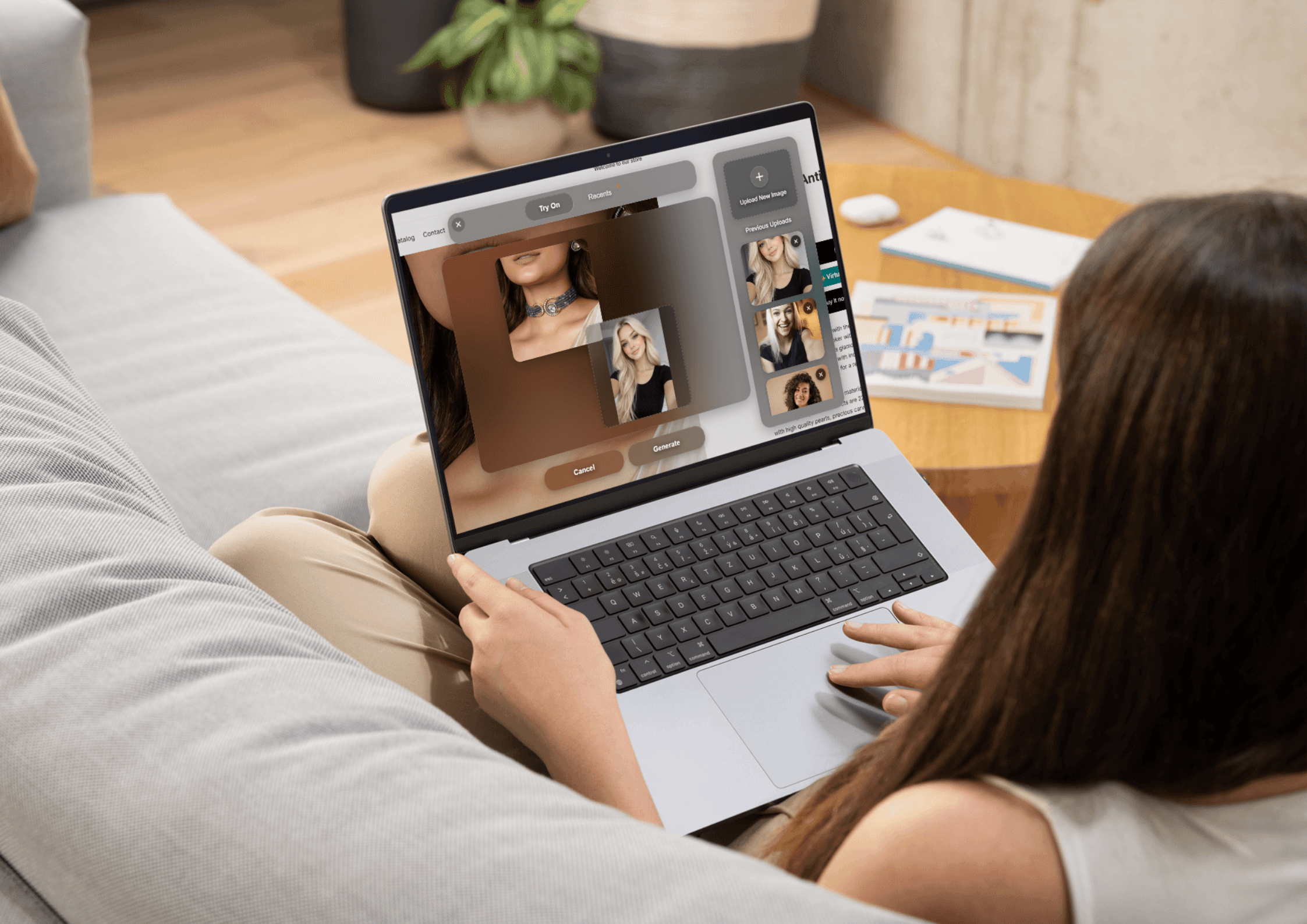
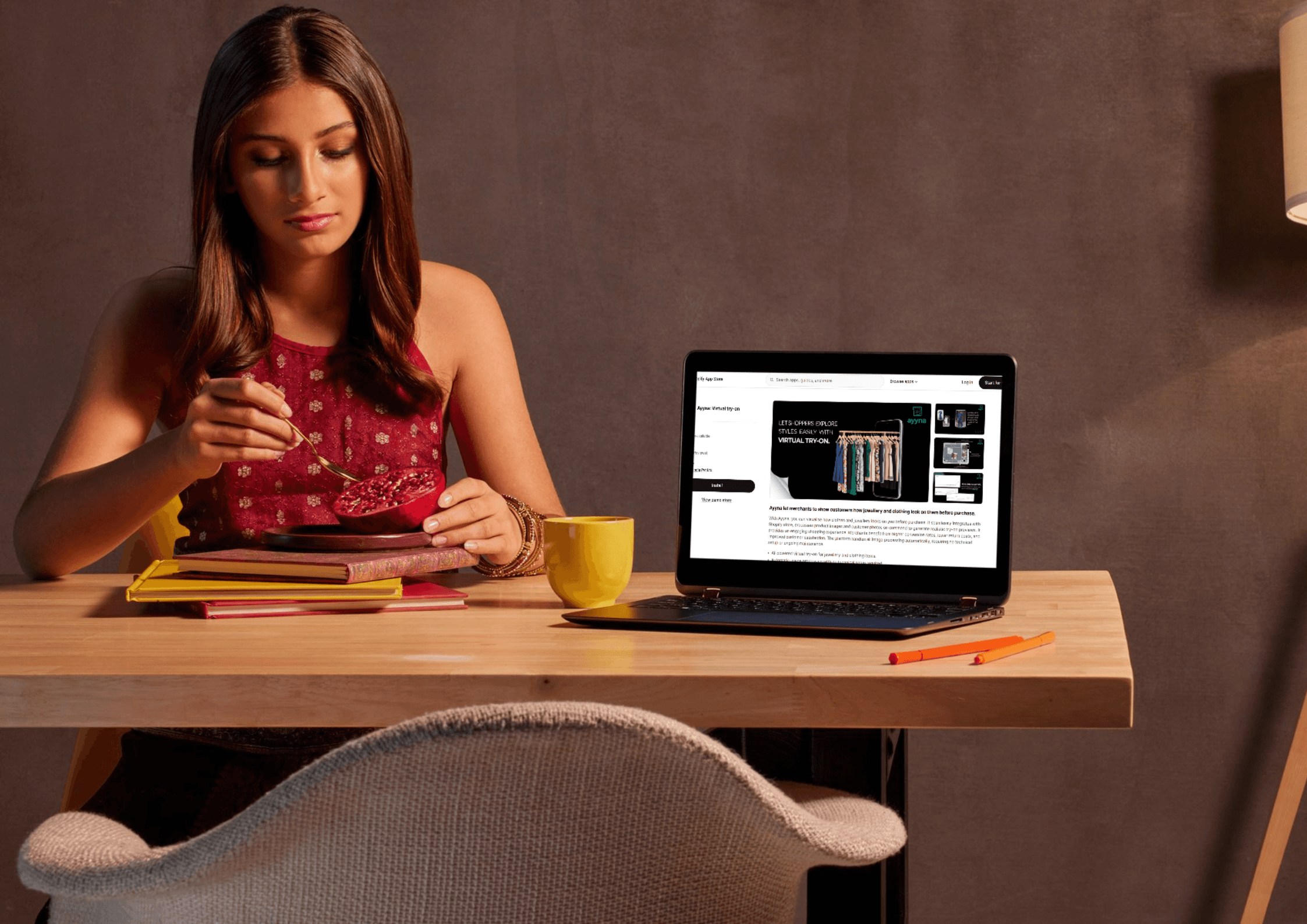
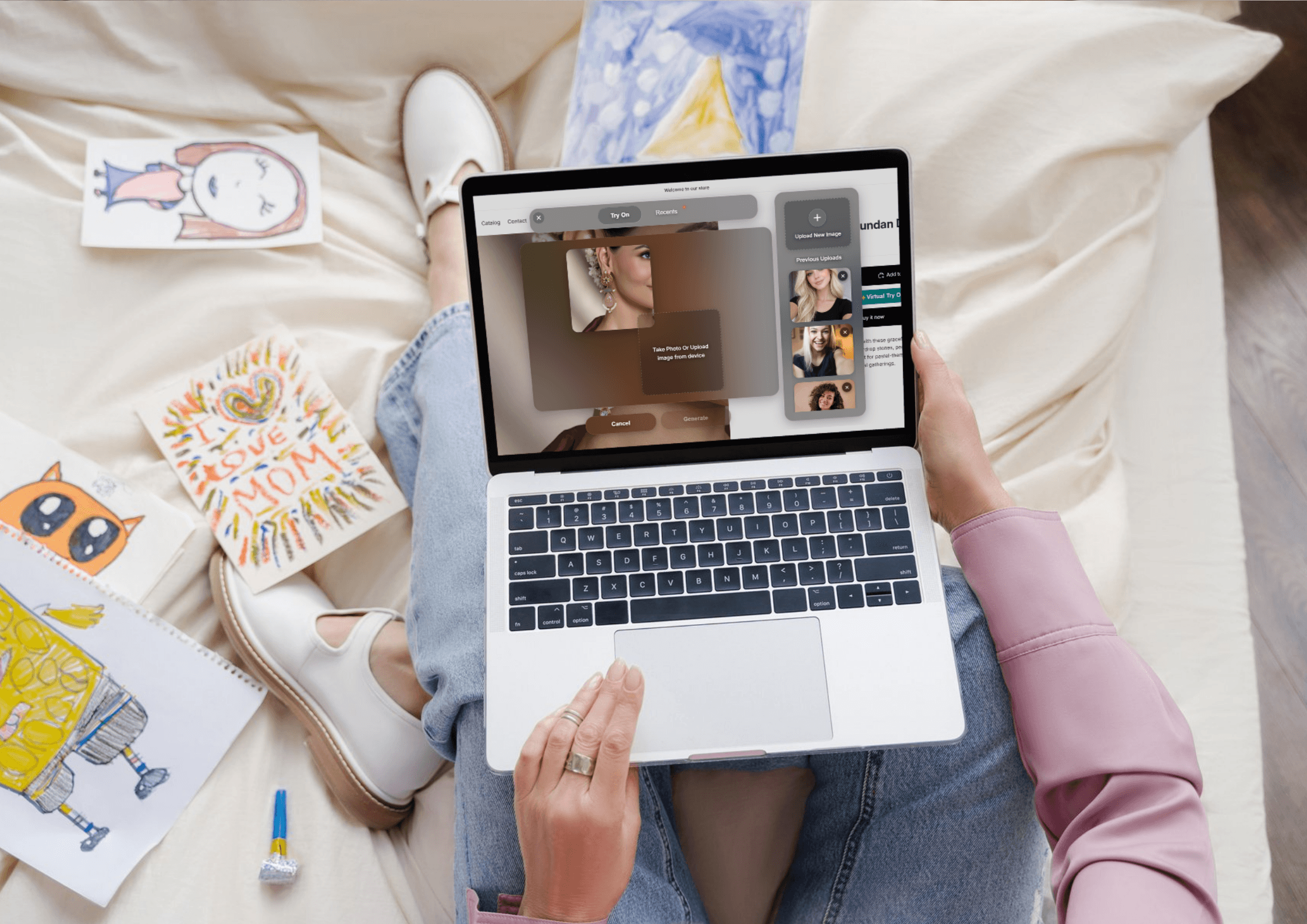
— Ayyna was built as a virtual try-on platform that allowed users to try clothing, accessories, and jewelry remotely by uploading an image. Designed primarily for Shopify stores, the platform focused on improving purchase confidence while giving brands better visibility into customer interest and behavior.
SERVICES
UI/UX, Framer Development, Pricing Logic, Store Dashboards, Analytics Tab
Project Overview
To enable customers to confidently try products online while helping stores increase engagement, capture leads, and control operational costs.
Ayyna was designed as a virtual try-on solution that combines AI, analytics, and smart cost controls to enhance online shopping experiences for both users and Shopify store owners.
Online stores often struggle with high return rates, low buyer confidence, and expensive product photoshoots. Ayyna addressed these challenges by offering AI-based virtual try-ons that removed the need for models or mockups, while also giving stores actionable insights into which products users were most interested in. The platform introduced a flexible usage model where first-time try-ons were free, followed by email capture to help stores generate leads. Advanced controls allowed merchants to manage budgets, highlight high-margin products, and balance user experience with server and operational costs.
Approach
The approach focused on designing a balanced system that aligned user convenience, merchant control, and AI-driven automation within a single scalable product.
The work began by mapping both user and merchant journeys to understand where confidence, cost, and conversion gaps existed in online shopping. Instead of treating the try-on experience as a standalone feature, it was designed as part of a larger system that included analytics, pricing logic, and marketing touchpoints. AI-powered try-ons were structured to feel instant and accessible for users, while behind the scenes, usage limits, product controls, and budget notifications were carefully designed to give merchants full control over cost and visibility. Continuous iteration helped refine how lead capture, demand requests, and analytics worked together, ensuring the platform delivered value without disrupting the shopping experience.
Process
The process focused on designing a scalable, business-aware experience that balanced user freedom, store control, and AI-driven automation.
The process began by identifying core pain points for both users and store owners, including lack of product confidence, high marketing costs, and limited visibility into customer intent. User journeys were designed to make try-ons effortless while gradually introducing value-driven touchpoints such as email capture and product requests. Parallel to the user experience, merchant-side flows were designed around analytics, product selection, budget limits, and billing transparency. Continuous iteration helped refine how AI-generated mockups, try-on limits, and notifications worked together without disrupting the shopping experience.
The design philosophy centered on empowering stores without restricting users. Every feature was designed to feel optional and flexible, allowing merchants to treat the platform not just as a tool, but as a marketing and decision-making system.
Final Design
The final design delivered a flexible virtual try-on ecosystem that combined AI-generated visuals, analytics, and cost control into a seamless Shopify-integrated experience.
The final product enabled users to try products virtually using AI-generated mockups while allowing stores to track engagement through an analytics dashboard. Merchants could monitor product interest, manage try-on limits, and control spending through package plans or a pay-as-you-go model. Stores also gained the ability to prioritize high-margin products by selectively enabling try-ons, while users could request access to unavailable products, creating a feedback loop for demand validation. The platform reduced operational overhead by eliminating the need for repeated photoshoots and manual mockups.
Product Images